

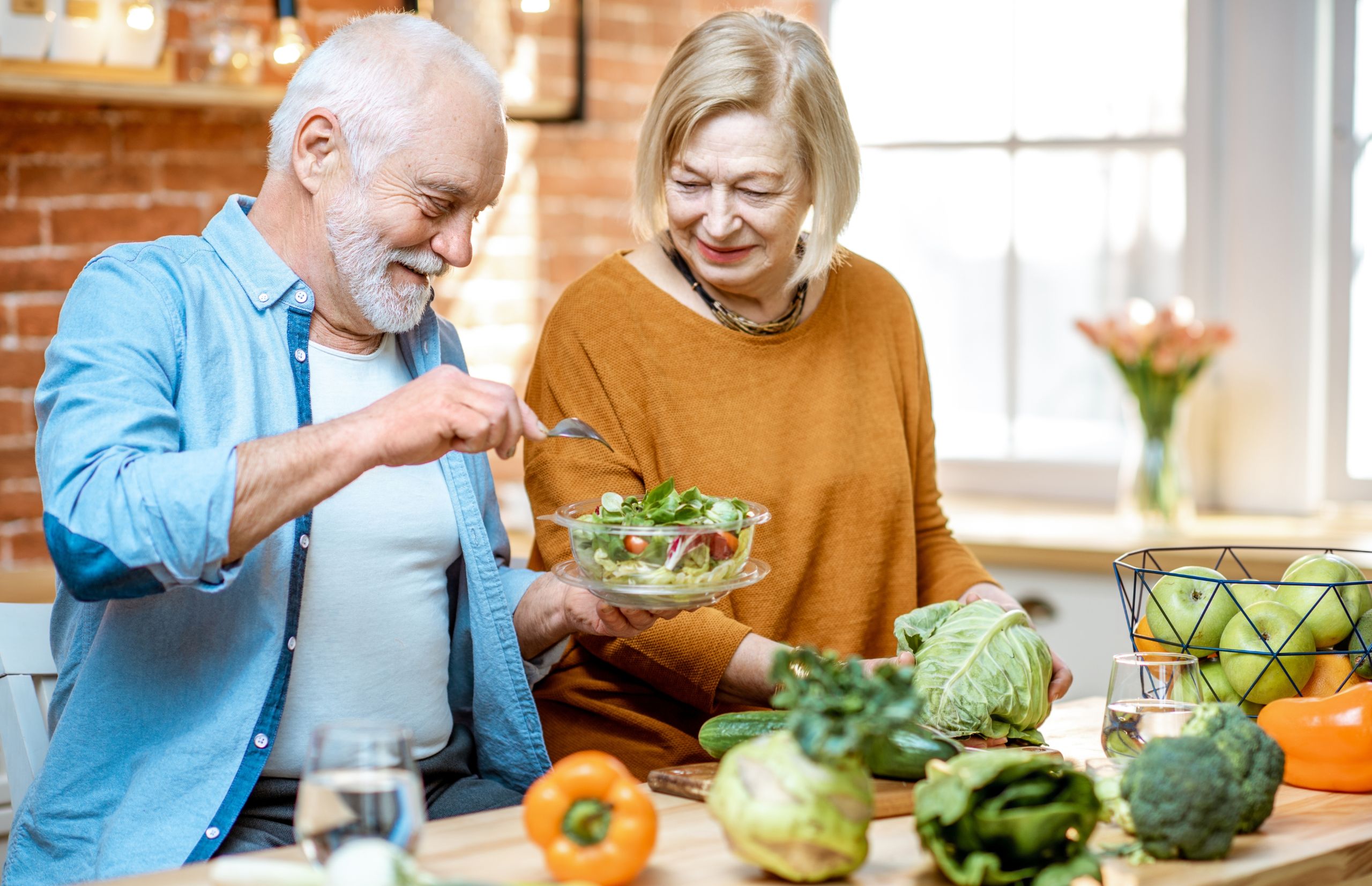
A balanced diet helps you to stay healthy, strong and active. As you get older, your body’s needs change – making it all the more important to ensure you get enough fluids, protein and foods rich in vitamins and minerals. And there’s one thing that should never be missing: the enjoyment of eating. Even small habits can make a big difference in everyday life.
1. Drink regularly
The sensation of thirst can diminish as you get older. You should therefore keep water or unsweetened tea in plain view and drink regularly throughout the day – as a guide, aim for around 1.5 litres a day, unless otherwise advised by your doctor.
2. Don’t forget protein
Protein helps maintain muscle mass. Good sources include dairy products, eggs, pulses, tofu, fish and meat. Ideally, spread protein-rich foods across several meals throughout the day.
3. Add colour to your plate
Vegetables and fruit provide valuable vitamins, minerals and dietary fibre. Different colours and varieties not only add variety, but also make your meal much more appetising.
4. Choose whole grains
Wholemeal bread, porridge, wholemeal rice and other wholemeal products provide dietary fibre and important nutrients. Together with plenty of fluids, they also support healthy digestion.
5. Focus on quality rather than quantity
Energy requirements often decrease with age, but the need for vitamins and minerals does not decrease to the same extent. It is therefore worth choosing foods that provide plenty of valuable nutrients.
6. Eat regularly
Three balanced meals give structure to the day and help to continuously supply the body with energy and nutrients. If you have a poor appetite, several smaller meals may be more comfortable.
7. Choose good fats
Vegetable oils, nuts and seeds provide valuable unsaturated fatty acids. A small handful of unsalted nuts or seeds, for example, can easily be added to muesli, a salad or enjoyed as a snack.
8. Make sure you get enough vitamin D
Vitamin D is important for muscles and bones. As the body produces less vitamin D through the skin with age, the Federal Office for Food Safety and Veterinary Affairs recommends taking a supplement from the age of 65. The appropriate dosage can be discussed with a doctor or at a pharmacy.
9. Eating doesn’t have to be complicated
Eating healthily doesn’t mean cooking elaborate meals every day. Frozen vegetables, tinned pulses, natural yoghurt, eggs or ready-portioned meals can help you put together balanced meals with minimal effort.
10. Food often tastes better when shared
Eating is more than just taking in food. A meal with family, friends or acquaintances adds variety, brings people together and can also boost your enjoyment and appetite.